The Holland Effect: How Lifelong Learning Creates Stronger Communities
What happens when learning doesn't stop when school does?
Maybe more than we realize.
Lifelong learning is often described as a way to keep the mind active, but its benefits extend well beyond what happens inside our brains. When people learn together, they build relationships, exchange ideas, discover shared interests, and become more connected to the communities around them.
Recent research is adding weight to that idea. A 2025 study of more than 12,000 U.S. adults age 65 and older found that people who participated in education or training later in life had better cognitive function over time than those who did not. (PubMed Central (PMC)) Other research has linked participation in formal learning with greater well-being, life satisfaction, self-confidence, and sense of belonging. (PubMed)
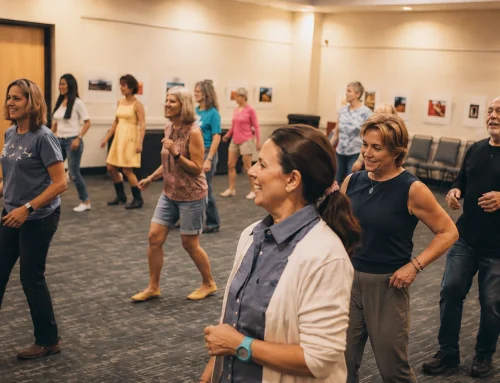
But consider what happens when learning takes place alongside other people. A class about local history can spark a conversation between neighbors. A photography workshop can introduce someone to a new friend. A lecture can lead to a volunteer opportunity. Learning becomes a doorway to social connection and community engagement.
That's where the idea of the "Holland Effect" comes in: When people have opportunities to keep learning, they don't just grow individually. They can help create a more connected, curious, and engaged community.
The Holland Center provides a real-world example. Through classes, lectures, arts and cultural programs, wellness activities, and community gatherings, learning becomes an opportunity to connect. Someone may arrive hoping to learn a skill and leave with a new interest, a new friend, or a deeper connection to the place they call home.
In an age when staying connected can sometimes mean scrolling alone on a screen, gathering with others to learn feels especially meaningful. Perhaps one of the best investments we can make in aging well isn't simply learning more, but continuing to learn with one another.
Because when curious people come together, knowledge spreads—and so does community.
Sources
- Wang, N., et al. "The Impact of Later-Life Learning on Trajectories of Cognitive Function Among U.S. Older Adults." Innovation in Aging, 2025. (PubMed)
- Leung, P., et al. "How Does Participation in Formal Education or Learning for Older People Affect Wellbeing and Cognition?" Journal of Aging and Health, 2021. (PubMed)
- U.S. Surgeon General. Social Connection and Community Health. (hhs.gov)